from 0 review
7 Days 6 Nights
Daily Tour
Unlimited
___
Experience Bhutan in a unique and adventurous way with the Happy Trips Bicycle Tour. This 7-day journey combines scenic cycling routes, cultural sightseeing, peaceful valleys, mountain passes, monasteries, traditional villages, and the warm hospitality of Bhutan.
Cycling in Bhutan is both challenging and rewarding. The routes pass through winding mountain roads, forested hills, riverside valleys, rural settlements, and beautiful viewpoints. Along the way, you will explore some of Bhutan’s most loved destinations, including Paro, Thimphu, Punakha, Phobjikha Valley, and the iconic Tiger’s Nest Monastery.
This tour is ideal for active travelers who enjoy nature, culture, photography, and outdoor adventure. You can cycle selected sections based on your comfort and fitness level, while a support vehicle remains available throughout the journey. Whether you are an experienced cyclist or a leisure rider, the itinerary can be adjusted to match your pace.
With Happy Trips, your bicycle tour is carefully arranged with experienced local guides, reliable transport, comfortable accommodation, meals, refreshments, and flexible cycling options. You may bring your own bicycle or request rental arrangements in Bhutan.
The best seasons for cycling in Bhutan are spring and autumn, when the weather is pleasant, skies are generally clear, and the landscapes are especially beautiful.
Upon arrival at Paro International Airport, you will be welcomed by the Happy Trips team. If the weather is clear, your flight into Bhutan offers wonderful views of the Himalayan mountain ranges, including sacred peaks such as Mt. Jomolhari and Jichu Drake.
After arrival formalities, begin your drive to Thimphu, Bhutan’s capital city. The journey follows the Paro and Thimphu river valleys and takes about one hour.
On the way, you may stop at Tachogang Lhakhang Bridge, one of Bhutan’s historic iron chain bridge sites associated with the great bridge builder Thangtong Gyalpo. You may also stop at Chuzom, the confluence of the Paro and Thimphu rivers.
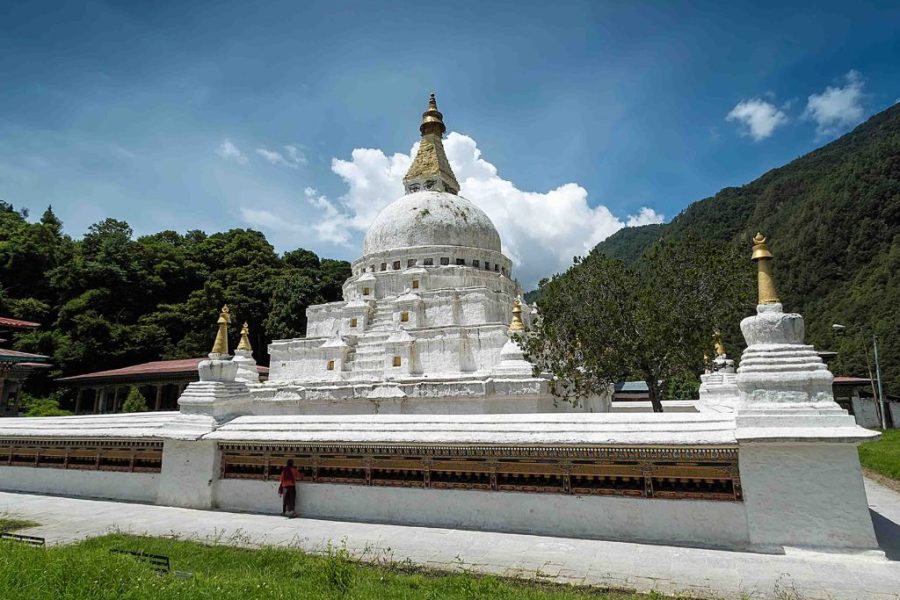
After reaching Thimphu, visit the National Memorial Chorten, built in memory of the Third King of Bhutan. Depending on time, you may also visit the Centenary Farmers’ Market or enjoy a relaxed walk through Thimphu town to experience the local lifestyle.
Overnight stay in Thimphu.
After breakfast, visit the impressive Buddha Dordenma statue, one of the largest seated Buddha statues in the world, overlooking Thimphu Valley. From this viewpoint, you can enjoy wide views of the city and surrounding mountains.
From Buddha Point, you may cycle downhill towards the valley or enjoy the Changsel bicycle trail, a scenic route that passes through peaceful forest areas and offers beautiful views of Thimphu. This section can be adjusted depending on your cycling experience and comfort.
Continue with sightseeing in Thimphu. Visit the Takin Preserve, home to Bhutan’s national animal, and explore local cultural attractions such as the Institute for Zorig Chusum, where students learn Bhutan’s traditional arts and crafts.
You may also visit the Craft Bazaar, Changangkha Lhakhang, or Tashichho Dzong, the “Fortress of the Glorious Religion,” which serves as an important religious and administrative center.
Overnight stay in Thimphu.
After breakfast, travel towards Punakha, Bhutan’s former capital. The route climbs to Dochula Pass, located at about 3,100 meters above sea level. The pass is beautifully decorated with 108 Druk Wangyel Chortens and colorful prayer flags. On a clear day, you can enjoy magnificent views of the Himalayan mountain range.
From Dochula Pass, you may choose to cycle downhill towards Punakha, passing through forests, villages, terraced fields, and scenic countryside. A support vehicle will be available for comfort and safety.
On the way, stop at Lobesa and take a short walk through rice fields and traditional village paths to visit Chimi Lhakhang, also known as the Fertility Temple. The temple is associated with the 15th-century Buddhist master Drukpa Kuenley, popularly known as the Divine Madman.
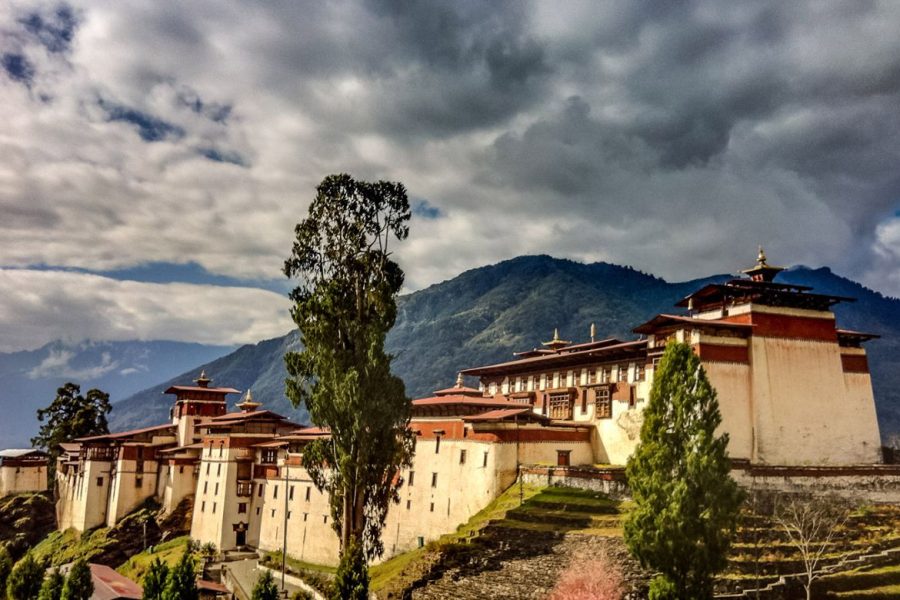
After lunch, continue towards Punakha Dzong, one of the most beautiful fortresses in Bhutan. Built in 1637, the dzong stands at the confluence of the Pho Chhu and Mo Chhu rivers and is admired for its architecture, woodwork, courtyards, and spiritual importance.
Later, visit the Punakha Suspension Bridge, one of the longest suspension bridges in Bhutan.
Overnight stay in Punakha.
After breakfast, begin your journey towards Phobjikha Valley, one of Bhutan’s most beautiful glacial valleys. The route passes through Wangdue Phodrang and continues over mountain roads, forested areas, and scenic viewpoints.
You may cycle selected sections of the route, including parts near Lawala Pass, depending on road conditions, weather, and your comfort level. The ride offers peaceful countryside views, mountain scenery, and fresh Himalayan air.
Upon arrival in Phobjikha, visit Gangtey Monastery, an important Nyingma Buddhist monastery located on a hilltop overlooking the valley. The monastery is connected with the great spiritual tradition of Pema Lingpa.
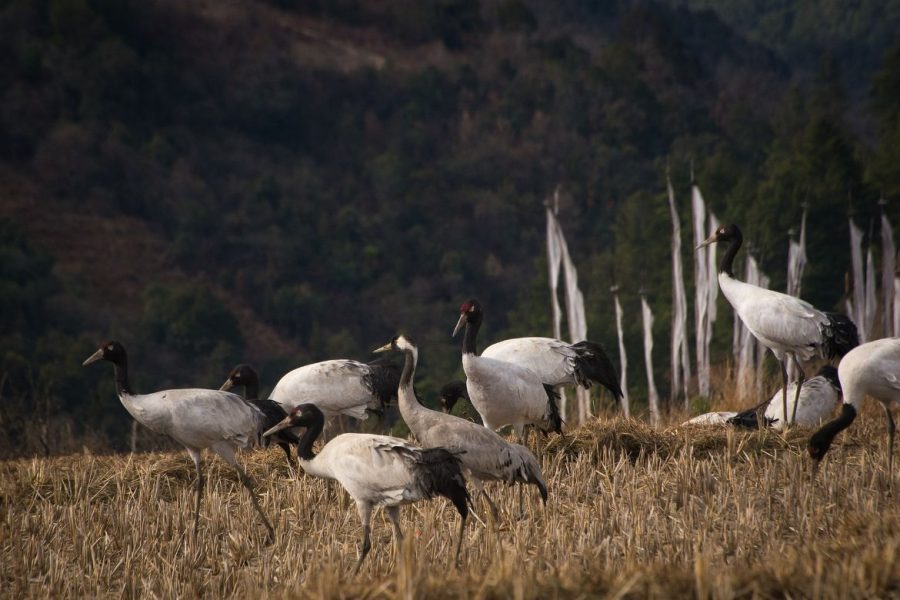
Phobjikha Valley is also known as the winter home of the endangered Black-necked Crane. During the crane season, usually from late autumn to winter, you may visit the crane information center to learn more about these graceful birds.
In the afternoon, enjoy a gentle cycling experience through villages, open valley landscapes, farmlands, and quiet country roads.
Overnight stay in Phobjikha.
After breakfast, enjoy the peaceful morning views of Phobjikha Valley before beginning the journey back towards Paro. The drive follows the same scenic route through Wangdue Phodrang, Dochula Pass, Thimphu outskirts, and onward to Paro.
There will be opportunities for short stops along the way for photography, refreshments, and optional light cycling sections, depending on time and road conditions.
After lunch, visit the National Museum of Bhutan, housed in the historic Ta Dzong watchtower. The museum displays collections related to Bhutanese culture, religion, history, art, and traditional life.
You may also visit Paro Rinpung Dzong, meaning “Fortress on a Heap of Jewels.” Built in the 17th century, this impressive dzong is one of Paro’s most important landmarks and features beautiful architecture, courtyards, and traditional paintings.
In the evening, stroll through Paro town and explore local handicraft shops.
Overnight stay in Paro.
After breakfast, drive to the base of Taktsang Monastery, popularly known as Tiger’s Nest. The drive from Paro town takes about 20 minutes.
Begin your hike to this sacred monastery, which is dramatically built on a cliffside about 900 meters above the Paro Valley. According to tradition, Guru Rinpoche flew to this site on the back of a tigress and meditated in a cave where the monastery now stands.
The hike takes around 4 to 5 hours in total, depending on your pace. Along the way, you will pass through pine forests, prayer flags, viewpoints, and peaceful mountain scenery.
After visiting the monastery, hike back down and return to Paro. In the evening, you may enjoy a traditional farmhouse visit and try a hot stone bath, a relaxing Bhutanese experience that is especially welcome after several days of cycling and hiking.
Overnight stay in Paro.
After breakfast, the Happy Trips team will transfer you to Paro International Airport for your departure flight.
You will leave Bhutan with wonderful memories of cycling through mountain roads, peaceful valleys, traditional villages, sacred monasteries, and beautiful Himalayan landscapes.
Tashi Delek, and we hope to welcome you again to Bhutan.
You can apply online for a visa here, or if you’re travelling with a tour operator, they may apply on your behalf. Read more about the visa here. Visitors from Bangladesh and the Maldives requiring a visa can apply either online before travelling or in person upon arrival in Bhutan.
A correctly input visa application can take up to five days to process.
The Sustainable Development Fee (SDF) is a daily levy paid by visitors to support Bhutan’s development. Since the kingdom first opened its doors in 1974, guests have played a critical role in our country’s growth. The SDF is collected by the national exchequer and funds are allocated to various projects that create long-term, sustainable opportunities for the Bhutanese people, through free healthcare, education and training, upskilling the tourism and hospitality industry, improved infrastructure, environmental preservation and conservation, cultural preservation programmes and initiatives that support local businesses and economies. The SDF is also a vital means of maintaining the exceptional forest cover and carbon-neutrality for which our small nation is world-renowned and globally critical. The SDF also helps us to ensure that we can continue to offer guests tranquillity and an intimate experience. A correctly input visa application can take up to five days to process.
The SDF is USD 100 per night for adults from all countries except for India. Children aged between 6 years and who have not yet turned 12 are eligible to pay USD 50 per night. Children who have not yet turned 6 years old do not have to pay any SDF. The SDF for Indian nationals (showing a valid Indian passport or Voter ID card) is Nu. 1,200 (or the equivalent amount in Indian rupees) per person, per night. Children aged between 6 years and who have not yet turned 12 are eligible to pay Nu./INR 600 per night. Children who have not yet turned 6 years old do not have to pay any SDF.